>What makes a great book?

>I read/watched War and Peace recently (I read the first couple of books and then switched to watching the BBC series) and I have to say it really is quite brilliant. The reason I find it so brilliant is that no matter what Tolstoy is writing about he doesn’t get bored or seek to rush on to a more action packed moment. This means of course less sales. But it also means Tolstoy is able to weave a truly epic tale based not on pure fiction and exageration but on normal life. As the title suggests it deals with the lives of Russian aristocrats during the Napoleonic Wars both in peaceful times and in war. It follows a huge number of characters, and its effort to describe all aspects of life, rather than just those that sell more books, mean that he’s able to develop a wonderful character in Pierre. Pierre is a confused philosophical character, who up until reading/watching War and Peace I wasn’t sure if any book could do justice to due to the depth of character inherent in such philosophically minded people.
But pick up the book not knowing of its reputation and you’ll probably put it down through boredom or confusion with all the different names in the first couple of chapters. So what is it that makes a great book? Is it the characters? Is it the writing? Is it just the presence of something new and interesting? Is it the action? What entertains us and makes us buy new books? And how are we able to appreciate books such as War and Peace and at the same time read tabloids and books designed for children?
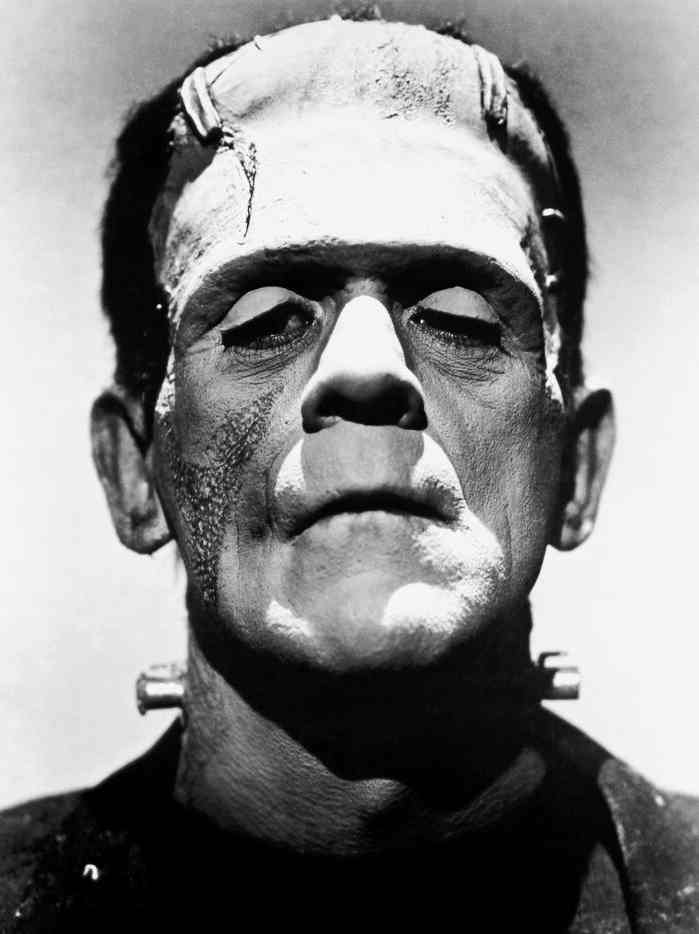
>Are we (humans) any more than machines?

>In Shelley’s Frankenstein, first published in 1818, it was foreseen that man (Frankenstein) would be able to create life (the monster). This life, though abominable to Frankenstein, is fully able to feel and think as a human does. But of course this is fiction. Would it be possible in real life to create such a ‘monster’?

In previous posts we’ve talked about new research that has meant we now seem closer than ever to acheiving this goal. But what would we be able to achieve? Would we be able to create a biological machine that did what it was told and seemed devoid of what we usually call ‘life’? Or would such a biological machine be exactly like us? Are we merely complicated machines or is there something more, a soul perhaps? And if we’re merely machines then would it be possible to recreate any figure from the past, exactly as they were at the time? Would this not be just like recreating an old robot?

>Does luck exist?

>Some people say it’s all about how you view the world; whether the glass is half empty or half full. But at times it seems impossible to view the glass as either half empty or half full. Sometimes it’s just completely full or competely empty. So what is it? Do some people have it easier than others? If so, and ignoring the extent to which that is based on choice, is it all coincidence? Is it simply how we define and perceive our experiences? Or is there a real and tangible thing called luck?

>How can we define ourselves?

>When we speak in the first person we say “I …”. But who is this ‘I’? Are we to be identified with our physical bodies? With our minds? Are we a collection of different things? Do we exist outside of our bodies?

Points to consider:

  • When a chocolate bar is placed in front of us and we say “one part of me wants it, while another tells me I have to stay healthy” what do we mean?
  • Apply electrical shocks to the brain and personality can be altered.
  • A person who suffers brain damage is not the same. In severe cases they may resemble nothing of their former characteristics, being more like a living body without all their previously ‘normal’ characteristics.

>The 3 Fundamentalisms Of Our Time

>When you hear the word fundamentalist what do you think of? Most people think of terrorists and Islamic Fundamentalism. But is it really that simple? Is Islamic Fundamentalism the only ‘big’ fundamentalist force in the world?

There’s a good book called ‘The Reluctant Fundamentalist’ in which the reader is led to believe (it’s all very cleverly inferred) that there is a clash of civilisations and we don’t know who’s going to win, between the Western and Eastern/Muslim civilisations. I can’t remember who said it but there’s a quote that goes something like “the whole world’s at war and only one side knows it”. I would completely agree, and here’s why:

The Cold War dominated a large section of Twentieth Century history, and was characterised by a fight between the ‘extremes’ of Communism and Capitalism. Now during the Cold War neither side embraced those ideologies completely. But after the collapse of the USSR and people like Fukuyama publishing “The End of History” people believed Capitalism had won, and was undoubtedly better. This led to a version of Utopian economics in which people like Alan Greenspan thought the market would always provide the necessary solution. These ‘radical’ Capitalists today are in my opinion one fundamentalist force, to which Islamic Fundamentalism has grown to oppose.

Note how less extreme Capitalist governments tend to be accompanied by a lessening of the call to terrorism.

What are your thoughts? Do you agree?

>Who really knows what justice is?

>Plato said that only philosophers know what justice is, and that as such philosophers should rule. Clearly this is far from the case today. But I’ve heard people espouse the same view (ironically people who dabble in philosophy…).

Is the fact that Plato’s view is seen as silly today a mark that it is wrong? Or is the fact that it’s still talked about, and promoted by the few, a mark that there is some logic in the idea? After all if philosophers don’t know what justice is then who does?

>Are there such things as "inalienable rights" & "self-evident truths"?

>An inalienable right is one that cannot be taken or given away from/by the possessor. The right to life, liberty and the pursuit of happiness are supposedly such rights, as indicated by the US Declaration of Independence, which says:

“We hold these truths to be self-evident, that all men are created equal, that they are endowed by their creator with certain unalienable rights, that among these are Life, Liberty and the pursuit of Happiness.”

This second sentence of the declaration also refers to “self-evident” truths. So a second question is can any truths be self-evident?

>Should we intervene in Libya?

>A no-fly zone has now been authorized by the UN, and this starts with the bombing of Libyan air defences i.e. it’s direct military action. Bearing in mind no one is calling for an intervention in Cote d’ivoire, or any other states where the people are calling for the leader to step down, should we be going ahead? And if the no-fly zone fails what then?

Also, since the UN authorisation for a no-fly zone Gaddafi has said that it has declared a ceasefire. Could this change anything?

Also, see this link for more info: http://nickandtheworld.wordpress.com/2011/03/18/the-gesture-politics-of-a-no-fly-zone/

« Older Entries Recent Entries »