Category Archives: Philosophy

How far can humanity advance?

Economic growth is a new concept, existing on a global level only since the Industrial Revolution. So what makes us think we can keep driving ever onward and upward if so little of history suggests we can?
Indeed much of our growth has been based on our imagination and creativity. But is man able to create anything entirely new? Try it now and you’ll find that what you think of in fact adapts something else that already exists. The greatest example in human history is the wheel. But that too we could have derived from a stone or a piece of fruit rolling down a hill, or perhaps more likely a log.

In addition, countries like China are able to grow fast because they are playing ‘Catch-up economics’. This occurs where new ideas, capital and technologies are being adapted/taken from abroad. Yet if the paragraph above is true then aren’t we all just playing ‘catch-up’ with nature? If we can’t ever think of anything new then we can only ever advance as far as nature allows us too. Right? Or wrong?
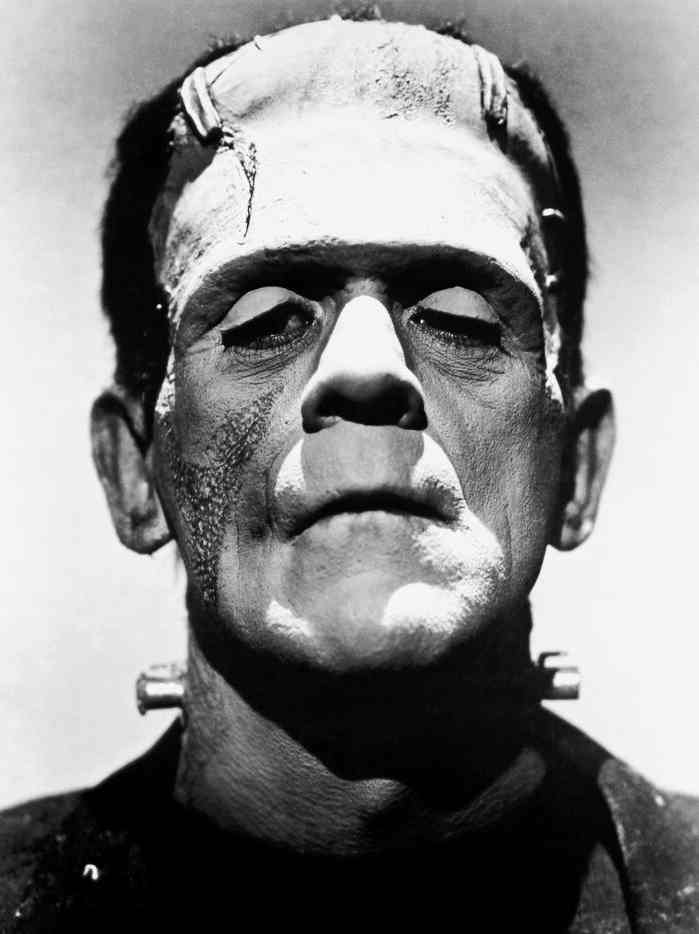
>Are we (humans) any more than machines?

>In Shelley’s Frankenstein, first published in 1818, it was foreseen that man (Frankenstein) would be able to create life (the monster). This life, though abominable to Frankenstein, is fully able to feel and think as a human does. But of course this is fiction. Would it be possible in real life to create such a ‘monster’?

In previous posts we’ve talked about new research that has meant we now seem closer than ever to acheiving this goal. But what would we be able to achieve? Would we be able to create a biological machine that did what it was told and seemed devoid of what we usually call ‘life’? Or would such a biological machine be exactly like us? Are we merely complicated machines or is there something more, a soul perhaps? And if we’re merely machines then would it be possible to recreate any figure from the past, exactly as they were at the time? Would this not be just like recreating an old robot?

>Does luck exist?

>Some people say it’s all about how you view the world; whether the glass is half empty or half full. But at times it seems impossible to view the glass as either half empty or half full. Sometimes it’s just completely full or competely empty. So what is it? Do some people have it easier than others? If so, and ignoring the extent to which that is based on choice, is it all coincidence? Is it simply how we define and perceive our experiences? Or is there a real and tangible thing called luck?

>How can we define ourselves?

>When we speak in the first person we say “I …”. But who is this ‘I’? Are we to be identified with our physical bodies? With our minds? Are we a collection of different things? Do we exist outside of our bodies?

Points to consider:

  • When a chocolate bar is placed in front of us and we say “one part of me wants it, while another tells me I have to stay healthy” what do we mean?
  • Apply electrical shocks to the brain and personality can be altered.
  • A person who suffers brain damage is not the same. In severe cases they may resemble nothing of their former characteristics, being more like a living body without all their previously ‘normal’ characteristics.

>Who really knows what justice is?

>Plato said that only philosophers know what justice is, and that as such philosophers should rule. Clearly this is far from the case today. But I’ve heard people espouse the same view (ironically people who dabble in philosophy…).

Is the fact that Plato’s view is seen as silly today a mark that it is wrong? Or is the fact that it’s still talked about, and promoted by the few, a mark that there is some logic in the idea? After all if philosophers don’t know what justice is then who does?

>Is existence, in all its entirety, good and proper? Or would you change things?

>This is a very difficult subject to put into words, and could get either an infinite number of different responses, or just complete confusion. But let me explain.

People often cite many problems with reality e.g. the problem of evil, death, misery etc. It is my belief however, that the science of reality is the way it has to be. In other words given the chance to end death I would not do it. But do you agree? If you were a supernatural, all-powerful God, would you change anything? If so, what? And why?

>What is love?

>Near to the top of any list of philosophical questions is something about love. It can often seem to be a highly personal topic. Yet there is also much to analyse. Is every loving relationship the same? Of course not right? So what is love? What is the commonality? And is there such a thing as ‘true love’, as opposed to the type shared with family and friends?

>What do we live for?

>If you’ve been staying in touch despite my absence recently then you’ll be happy to know that I’m back! The internet has just been connected at my new house today. So quick first post and then on to all those emails (groan):

Toqueville once said that people live to acheve two things: happiness and glory/honour.

  1. Do you agree?
  2. Is there a division between the two or is the second merely a contribuent to the first?
  3. Did we seek glory and honour more in Toqueville’s day (early nineteenth century) than we do now?

>What was it that made the great leaders great?

>Analyse the great leaders of history and you’ll learn about the positive traits that enabled them to find success, whether it be wit, oratory skills, strength, or any number of different abilities. Yet in all the world many people have these skills. So is it more about being in the right place at the right time? Or would the right person always find their way to the top irrelevant of what structures they’re pitted up against?

« Older Entries Recent Entries »