Category Archives: Other

>Should prostitution be legalised?

>
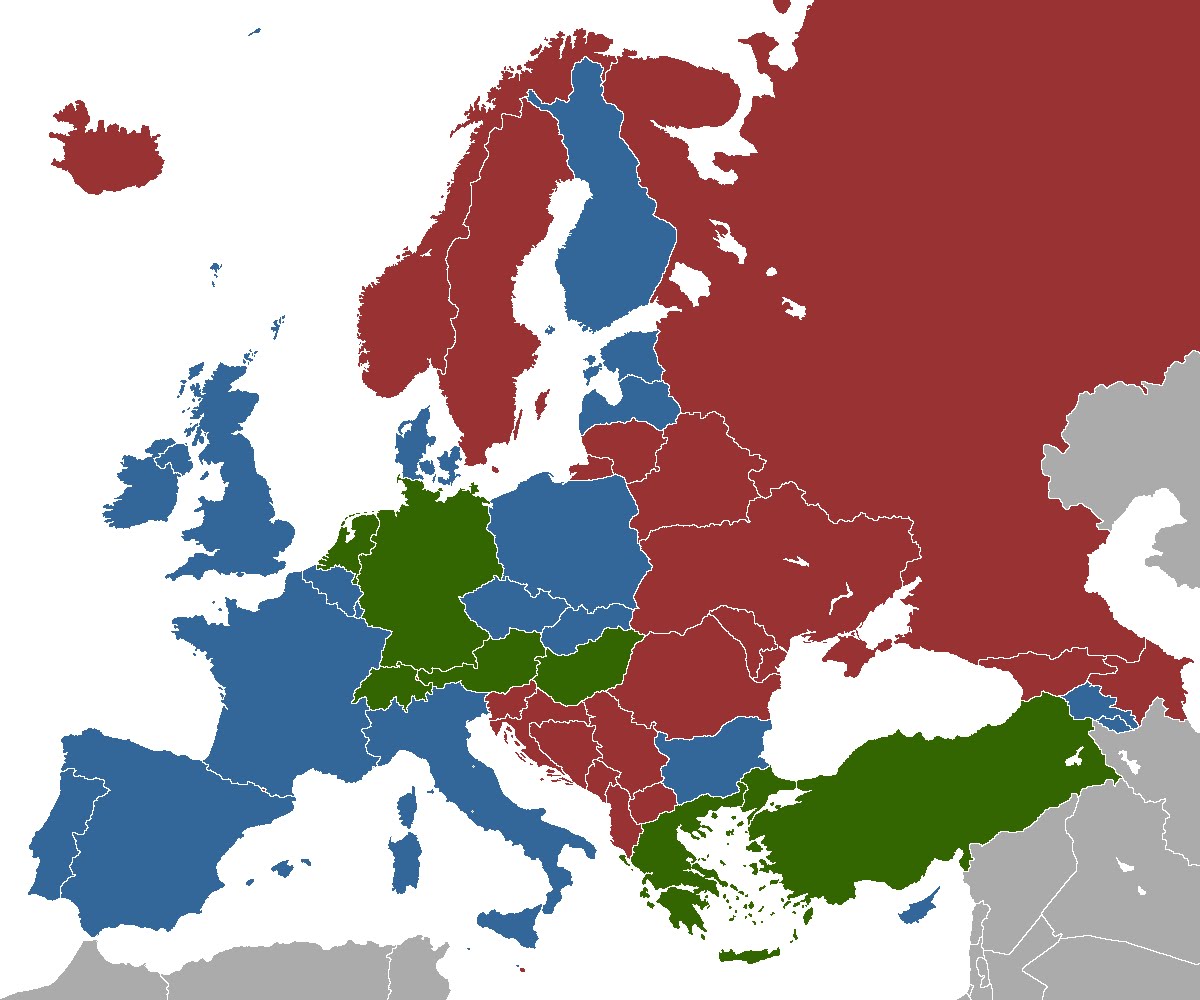
You can see this as either the ancient question: “is prostitution a vice and are those involved evil or somehow lacking in judgment?”

Or you can see it in a more modern light: “is prostitution a form of exploitation to be abolished or an occupation that cannot be detroyed and therefore must be regulated?”

P.S. The map correlates to the existing legal status throughout Europe:

  • Green – Prostitution legal and regulated
  • Blue – Prostitution legal but organized procuring illegal
  • Red – Prostitution illegal
  • Grey – No data

>Should the rich help the poor?

>In todays culture we assume yes. But consider this example:

“Consider Joe Smith and his identical twin brother, Jim, who have identical abilities and education. Joe decides to take a job as a high school teacher of economics. He teaches six hours a day and the rest of the time he spends fishing, swimming and sailing. He is very happy. Not surprisingly [Stiglitz never experienced high school teaching], his pay is very low. Jim becomes an economic consultant. He works seventy hours a week and has no time for fishing, swimming, or sailing. […] One has a high income, one a low income. Is it fair that Jim should pay far higher taxes than Joe?”
Joseph Stiglitz illustrating problems of taxation in Economics of the Public Sector, Pg 472.

>When did genocide become ‘wrong’?

>Genocide has been a fairly common feature of human history, with some form of it in almost every country’s history. To give a few examples:

  1. Ben Kiernan, a Yale scholar, has labelled the destruction of Carthage at the end of the Third Punic War (149-146BC) as the first genocide in history.
  2. Charlemagne, who is credited for starting the process of nationalisation and the creation of ethno-homogenous societies in Europe, did so partly through genocidal actions. 
  3. Hundreds of scholars label some of the Mongol conquests, particularly in the 13th century, as genocidal. Despite the positive light in which Mongols see Genghis Khan, people throughout China and the eastern Middle East still see him as a genocidal mad man to this day.
  4. David Stannard argued that the destruction of the aboriginal peoples of America was in fact more than just disease as we commonly think today. He says that there were “a string of genocidal campaigns”.
  5. Starting in the reformation there have been frequent genocides by Catholic and Protestant forces intent on creating religious unity within European states. The Cromwellian conquest of Catholic Ireland is often referred to as a genocide. After the Battle of Culloden in 1746 the British government undertook a ‘pacification’ of the predominantly Catholic Scottish highlands, which wiped out a culture.
  6. Reynald Secher argued that the actions of the French government during the revolt in the Vendée (1793–1796) was the first modern genocide.

This last week the Serbian parliament formally apologised for the 1995 Srebrenica Massacre in which 8000 Bosnian Muslims were killed, and labelled it genocide. Many countries around the world still seek to create ethno-homogenous societies through violent means in emulation of Europe. But now we have almost universal agreement that this would be wrong. Why? What’s changed? And when did it happen?

>State of Nature

>Dr S Lechner, a Lecturer from Kings College London, wrote an article on the above especially for this website. You can see it here:
http://www.thebigqs.co.uk/Articles/Philosophy/State%20of%20Nature%20by%20S.%20Lechner.pdf

It is a subject that has provoked a lot of thought from philosophers and also from the public in general. What questions do you see arising from the topic? What do you see the State of Nature as being? If there was no creation then can we even talk about a State of Nature?

Any thoughts are welcome.

>Is ‘freedom of speech’ a natural right?

>The last few years have seen the words “freedom of speech” bandied around as if it were the most common phrase in the world. People fall on both sides of the debate in every country around the world.

Yet some journalists claim that the majority of people don’t even understand what ‘freedom of speech’ means. A Canadian journalist (Marni Soupcoff) published an article today saying that the majority of Canadians just “don’t get” freedom of speech.

What does ‘freedom of speech’ mean to you and to what extent should it be supported?

« Older Entries Recent Entries »