>What is it to be smart?
>
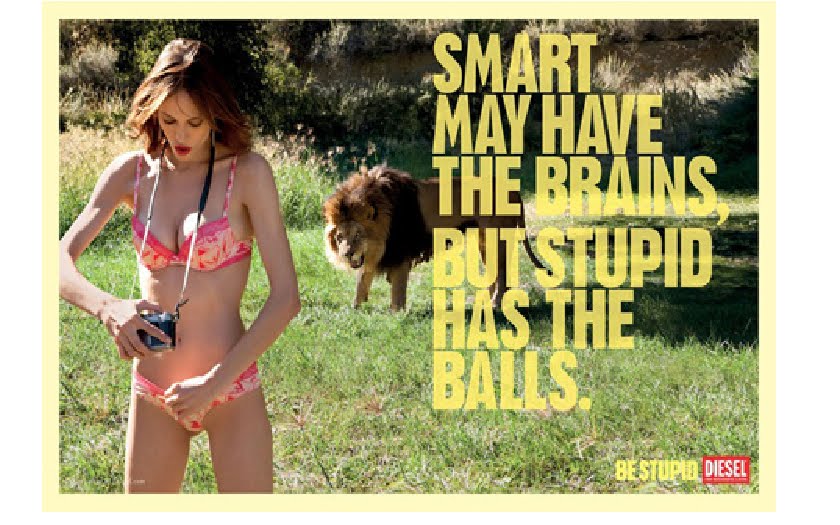
I know this picture has little relevance but I couldn’t resist putting it up. You’ve got to give credit to a good advert once in a while.
>
I know this picture has little relevance but I couldn’t resist putting it up. You’ve got to give credit to a good advert once in a while.
>
>
>Should markets be unregulated? Should we be able to sell drugs, guns, ourselves, part of ourselves like organs, and various other things likely to grab press attention?
Should markets be heavily regulated? Where is the limit for regulation and where should it come from? Should all regulation be carried out by the state?
>I’ve deliberately made this question open to interpretation so make of it what you will. But to start the discussion, global capital flows were larger as a percentage of GDP at the end of the nineteenth century (i.e. when the European Empires covered about 3/4 of the globe) than today, and some critics talk of “Americanisation” as synonomous with globalisation.
>Technological developers and workers are predicting machines will be as intellectually capable as apes by the end of the century, and also able to feel and empaphize as we do. Suppose a situation came to be where machines were more intelligent than us, and just as life like in that they felt emotions as we do. Would you accord them equal rights? If we accorded them equal rights based on our similarities then why do we have greater rights than apes? If not then how do we justify our ‘human rights’ being solely available to humans?
>
>I’m sure you’ve all heard the idea that democratic nations are less likely to go to war with each other, but what about how long they’re likely to stay in a war? Think about Vietnam, Iraq and Afghanistan and you will probably think democracy encourages the troops to come home. But what about war that’s a little closer to home such as total war? In the limited wars of the seventeenth century countries would sue for peace if casualties looked too bad, or victory seemed too difficult to achieve. So what changed between then and the two world wars? At the time of the First World War all European state leaders feared their people and what they would do. I have recently heard it voiced by top Professors that it was democracy and nationalism that made it so difficult to accept peace talks during WW1. Do you agree?
>Have you ever heard anyone tell you that it’s a waste of your time and effort to give money to someone on the street, or even for us to give to charities at all? Right wing movements say that charity creates dependency. Does it? If so does that mean we’re better doing as African author Dambisa Moyo says and weaning countries off of aid? And is it right to talk about charity for individuals and countries in the same conversation? Or are they so different that such comparisons are a waste of time?
>The dictionary defines ‘natural’ as those things that haven’t been altered by mankind. But what are we if not natural? Were we created in a different way to all other life?
But then if we are natural then how is it that we can seem to have different goals to nature? There strikes me as an odd similarity between nature and a hunter-gatherer society. Both house acts we would consider primitive and barbaric. If you look at the average murder rate for those tribes in the Amazon you’ll find that in comparison to more ‘civilised countries’ those tribes look very violent indeed. At the same time evolution seems very cruel, as does the circle of life. In both cases we (humanity) seem to be pitying them while in the process of wiping them out.
So are something ‘other’ than nature? Can we be at odds with it?
 Battison's Blog